
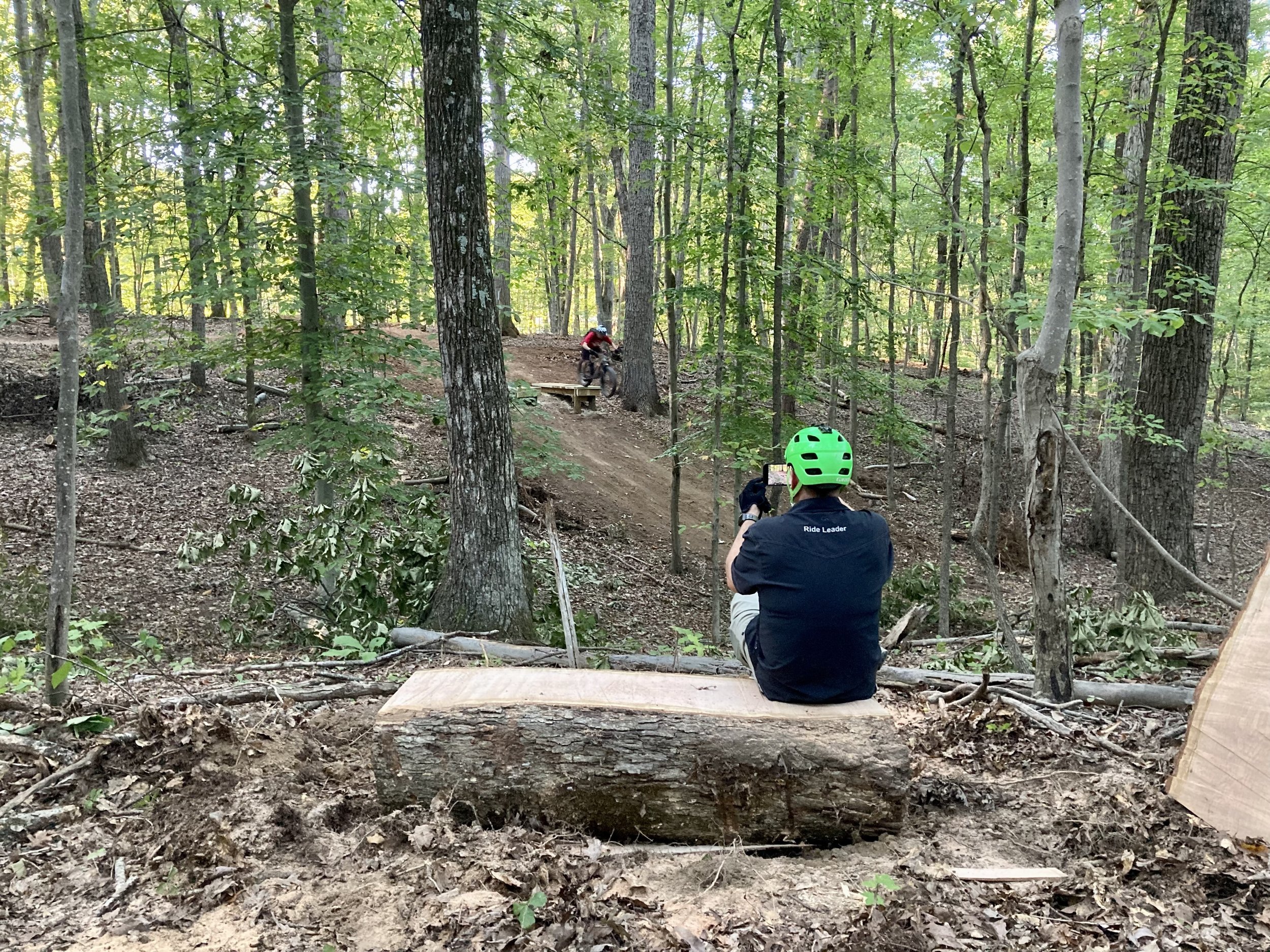
The world of photography—and technology—changed dramatically with the release of the first iPhone in June of 2007. Quite frankly, that device was one of the most significant innovations of our time. Beyond everything else packed into it, the inclusion of a built-in 2-megapixel camera was transformative. Suddenly, millions of people had a camera in their pocket, ready to document everyday life.
Three years later, Instagram entered the picture, and the world was instantly flooded with photos of just about everything imaginable.
As a photographer, I was genuinely excited by the idea of always having a camera with me. When I headed out to document rides for my books, I typically carried a point-and-shoot camera. The prospect of leaving that extra piece of gear behind and relying solely on the iPhone was appealing—though it would take a while before the iPhone’s camera performance could rival my dedicated digital cameras.
Even so, for everyday photography, the iPhone camera did a phenomenal job.
Fast forward nearly two decades. Today’s iPhones—like the iPhone 15 Pro Max I currently use—feature advanced multi-camera systems that are legitimately powerful tools. You now have, in your pocket, a 13mm ultra-wide lens, a 24mm main camera capable of capturing 48-megapixel images, and a 120mm telephoto lens capturing 12-megapixel photos. To take advantage of this hardware, the Camera app is packed with features—including tools that make capturing action photos remarkably easy.
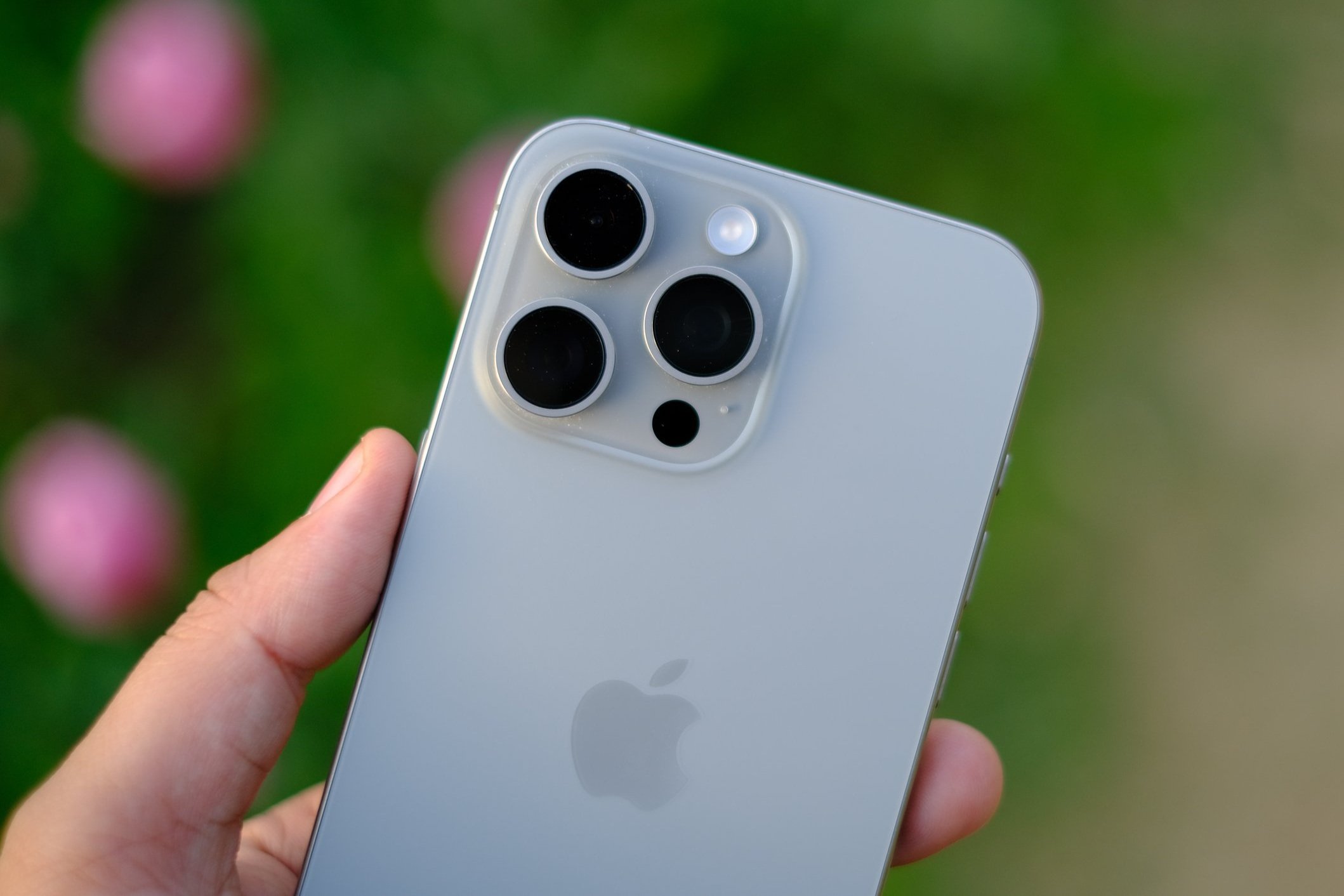
One of my favorite features is Burst Mode. Beyond tapping the shutter for a single image, you can slide or hold controls to capture bursts at up to 10 frames per second—perfect for action photography.
Below is a quick tutorial on how to use Burst Mode to take your riding photos to the next level.
A Quick Note on Burst Mode
Burst Mode first appeared on the iPhone 5 in 2012, and the ability to slide the shutter button to capture bursts or quick video was introduced with the iPhone 11 lineup in 2019.
Everything described below should be available on iPhone models released after that, though some features may behave slightly differently on newer versions.
iPhone Action Photos
Storage warning: Burst Mode comes at a cost. Shooting at 10 fps can quickly consume storage space. After each session, select your best image and delete the rest.
Some Global Tips for Better Photos
Light matters
The best time to shoot is during golden hour—shortly after sunrise or before sunset—when light is soft and flattering. Midday light tends to be harsh and creates unflattering shadows.
Composition matters
Simple is better. Eliminate background clutter, focus on your subject, and keep horizon lines level. To help with composition, enable your iPhone’s Grid and Level guides via: Settings → Camera → Composition
The goal is to capture the energy of the moment.
Activating Burst Mode
There are two ways to enable Burst Mode:
Method 1: Shutter Slide
Lightly tap the shutter and drag it left (portrait) or down (landscape) toward the preview image.
The camera will begin shooting bursts at ~10 fps until you release.
Avoid pressing too hard or holding still, which activates video mode.
Sliding right (or up) activates video.
Method 2: Volume Button
Tap and hold the Volume Up button to trigger Burst Mode.
This is especially useful for low-angle shots.
To enable this:
Go to Settings → Camera
Turn on Use Volume Up for Burst
Click and drag the shutter down towards the preview image to engage burst mode. Hold the shutter for as long as you want the iPhone to continue the burst.
-

Click and drag shutter
Lightly click and drag the shutter button down to the preview image. This will engage burst mode. You can also use the volume up button.
-

Hold the shutter
Hold the “drag” for a as long as you want burst mode to be active. Once you release, the iPhone will stop shooting at 10 fps.
Tips for maximizing Burst Mode
Clean your lens
Bring a small microfiber cloth. I keep one in a zip-lock bag so it stays clean on the trail.Get in position
Let your subject dictate where you stand. Factor in light direction and background distractions.Frame first
Take a few single shots to dial in framing before the action begins.Start early
Begin shooting a second or two before your subject enters the frame. This ensures you don’t miss the peak moment.Use focus wisely
If the phone will stay still, lock focus and exposure by tapping and holding the screen.
If you’re panning with your subject, let autofocus do the work—don’t lock focus.
Review and delete
Select your best frame and delete the rest to save space.
What Is “Chimping”?
In photography, chimping refers to checking the camera screen immediately after taking a photo. The term comes from the “ooh, ooh, ooh” reaction photographers make when they nail a shot.

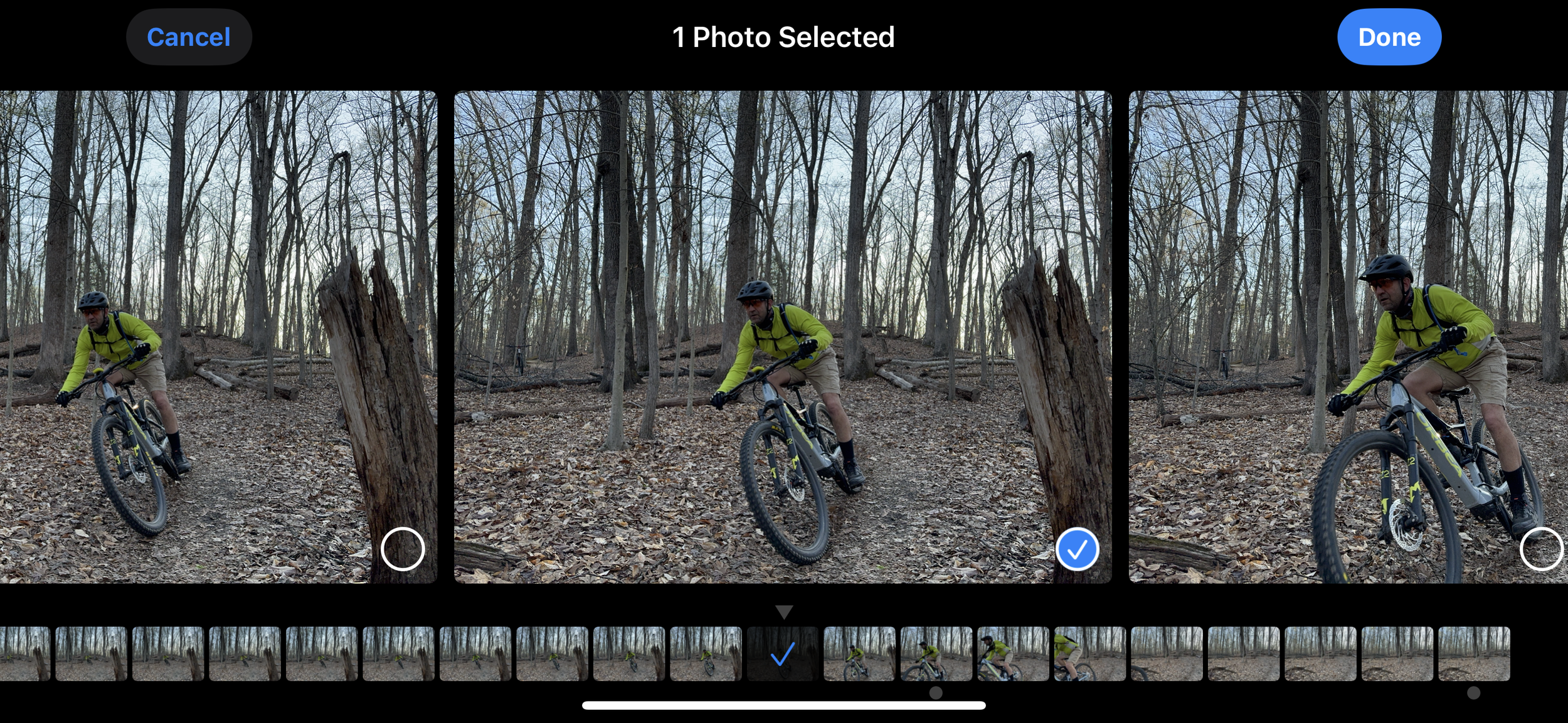



The selected image - slightly tweaked and cropped
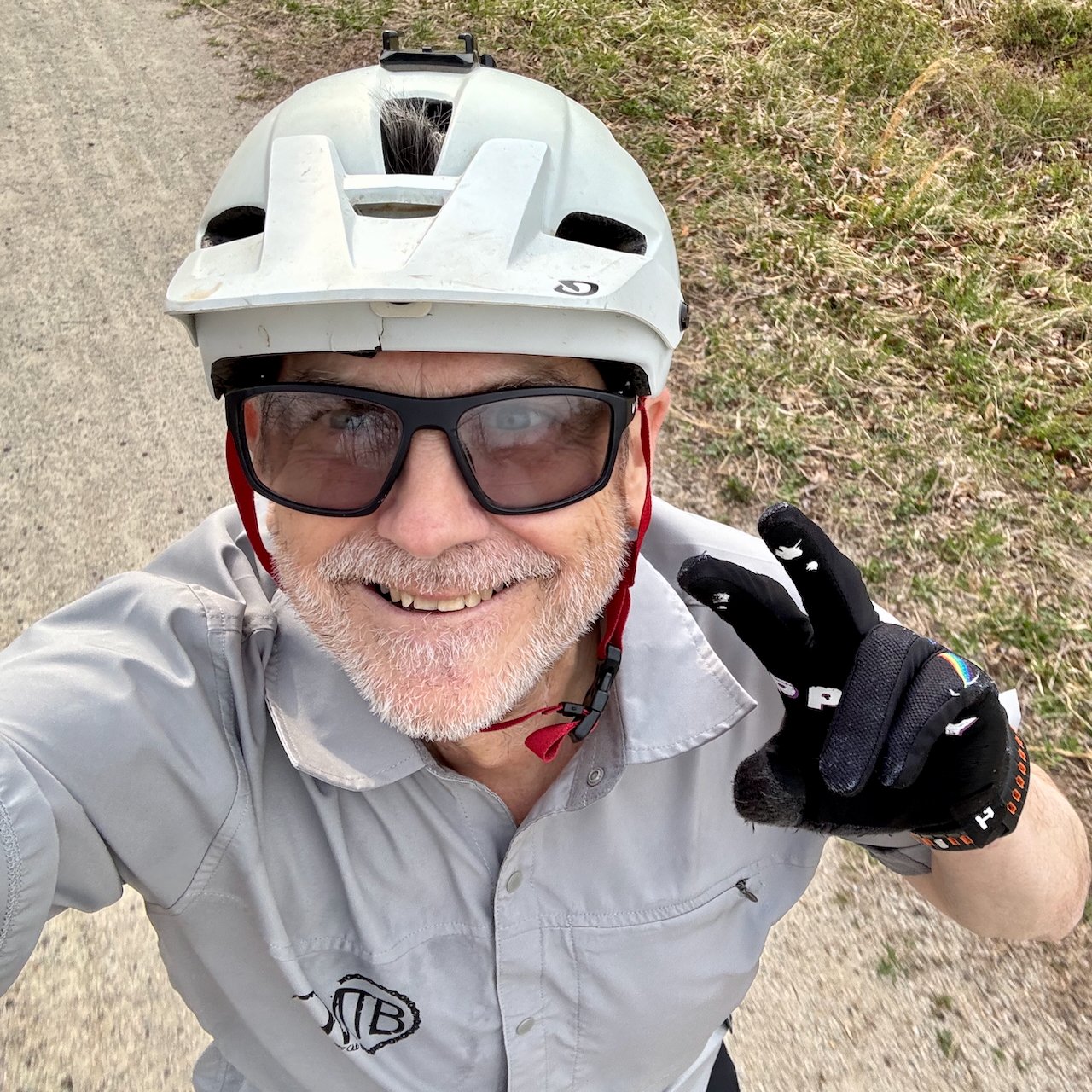
Capturing yourself in the action
If you follow me on Instagram, you’ve probably seen my #dangerLlama photos—a technique inspired by my buddy Pete Beers’ #dangerPanda shots.
These are action selfies taken while riding, with my arm extended overhead. They create a dynamic, playful perspective. I shoot these using Voice Control, which I enable before rides so it’s ready when needed.
I simply pull out the phone, make sure the Camera app is open, extend my arm, and say “Burst.” The phone captures dozens of frames, from which I select one to share.
This technique also works with a tripod, though it takes some experimentation to ensure the phone can hear your voice.
For this, I recommend:
A Joby GorillaPod (with smartphone clamp)
A Manfrotto Mini tripod with a universal clamp
Since my phone lives in a Quad Lock case, I use their tripod adapter—it’s lightweight and easy to pack.
#dangerLlama - riding selfies.

My kit fits in my pockets.
Setting Up Voice Control for Burst Mode
Go to Settings
Select Accessibility
Tap Voice Control and enable it
Tap Commands
Tap Create New Command
Enter a phrase (e.g., “Burst”)
Tap Action → Run Custom Gesture
Replicate the burst gesture
Save the gesture
Set application to Camera
Save
Test the command in the Camera app. It works with both front and rear cameras.
Note: Voice Control can be intrusive if left on all the time. Background conversations can interfere with typing or other actions. I recommend enabling it only when you need it.

Final Thoughts
Burst Mode isn’t just for action photography. It’s perfect for:
Candid portraits
Group shots (someone always blinks)
Water splashes
Unexpected moments
Any situation where timing is critical
The best way to understand its power is to use it—experiment, review, adjust, and repeat.


